Transcript
Announcer:
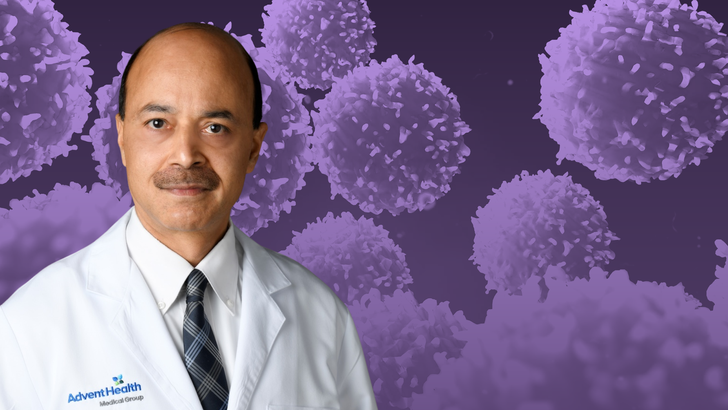
You’re listening to Project Oncology on ReachMD. On this episode, we’ll hear from Dr. Guru Sonpavde, who serves as the Medical Director of Genitourinary Oncology, Director of the Phase One Clinical Trial program and the GU Oncology Program, and the Christopher K. Glanz Chair for Bladder Cancer Research at AdventHealth Cancer Institute in Orlando. He’ll be discussing the treatment landscape for advanced urothelial carcinoma. Here’s Dr. Sonpavde now.
Dr. Sonpavde:
Advanced urothelial carcinoma has evolved and dramatically changed over the past few years. So now, the preferred first-line regimen is the combination of EV or enfortumab vedotin, which is a nectin for binding antibody drug conjugate, or ADC, with a tubulin toxin payload. So EV combined with pembrolizumab, the PD-1 inhibitor, has really become the preferred first-line therapy for advanced urothelial carcinoma, regardless of patients who are cisplatin-eligible or cisplatin-ineligible.
As we know, historically, we have given these patients different regimens based on cisplatin eligibility. But now we have the single regimen which is the favored regimen for both of these groups of patients. This is a highly active regimen. The response rate is around 65 to 70 percent with a CRR, complete response rate, of 30 percent, which is also highly durable.
Now, because EV plus pembrolizumab has become the preferred first-line regimen, the previous standard of platinum-based chemotherapy has moved down to a de facto second-line regimen. Although, in the second-line post-EV pembrolizumab setting, we also have the availability of erdafitinib, an FGFR inhibitor for patients with FGFR3 mutations or fusions.
And we also have trastuzumab deruxtecan, an antibody conjugate, which is approved in patients who are HER2 IHC3+. So really, this is why getting genomic studies and HER2 IHC have become very important as soon as we see patients with metastatic disease.
And one thing I do want to add is we did have a Trop-2 targeting antibody drug conjugate, sacituzumab govitecan, in the past, which was based on an accelerated approval. But unfortunately, this has been removed from the market since the phase 3 trial just missed the mark. However, this drug is still on an NCCN guideline as a potential option, and we do use it sometimes.
There are some areas of uncertainty in clinical practice after all of these dramatic changes that have come recently. So some areas—just to cite some examples—are that EV plus pembrolizumab, which of course is approved in advanced metastatic disease, has now also become the preferred perioperative therapy in patients undergoing radical cystectomy for muscle-invasive bladder cancer. So now the question becomes, in patients who received EV plus pembrolizumab for perioperative therapy, what do we do with these patients when they or if they progress in future to metastatic disease? So repeating EV plus pembrolizumab after prior perioperative EV plus pembrolizumab has some uncertainty in that area. I think we need further studies. Obviously, the longer the treatment-free interval after perioperative therapy with EV pembrolizumab, the better the case you can make for repeating EV plus pembrolizumab.
Now, the other question that arises is that the optimal duration of EV and pembrolizumab is unclear in patients with metastatic disease. So, in the trial, what was done was EV was given until progression or toxicities, while pembrolizumab was stopped at two years. But the reality is that the median number of cycles of EV that could be given was nine cycles, and this is mostly because of cumulative peripheral neuropathy, which limits the ongoing regimen for a much longer duration.
And the other important question that arises in the clinic these days is optimal sequencing therapy. So after EV pembrolizumab, we have platinum-based chemotherapy, but we also have erdafitinib and we have trastuzumab deruxtecan. How we sequence these regimens is still more of an art than science.
Announcer:
That was Dr. Guru Sonpavde walking through the available therapies for advanced urothelial carcinoma. To access this and other episodes in our series, visit Project Oncology on ReachMD.com, where you can Be Part of the Knowledge. Thanks for listening!